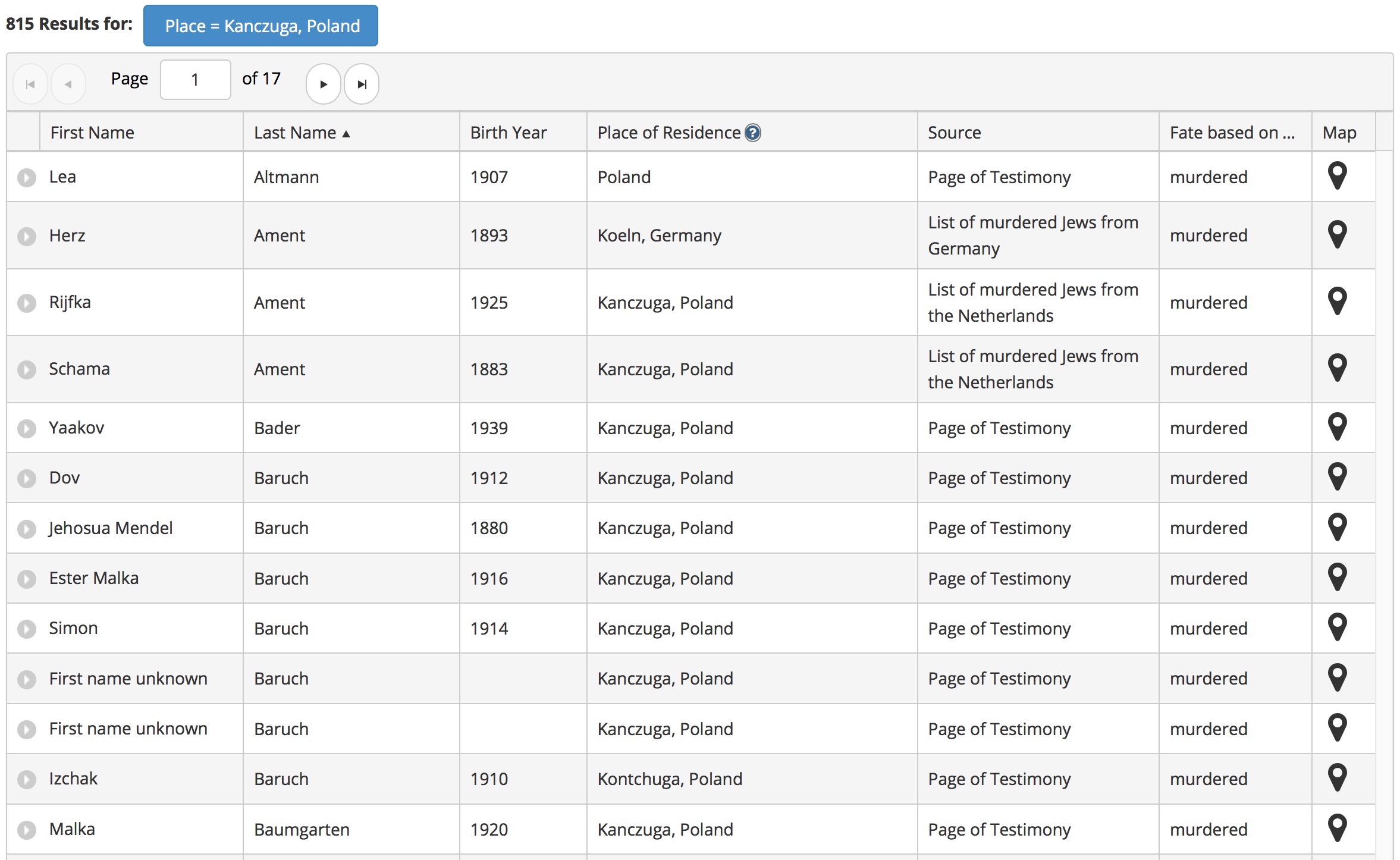
Updates to the Compendium were delayed for several months while I was upgrading the server. Today, in addition to a number of smaller updates, there are now links from all 1350+ Polish towns in the Compendium to the Yad Vashem Shoah Names Database.
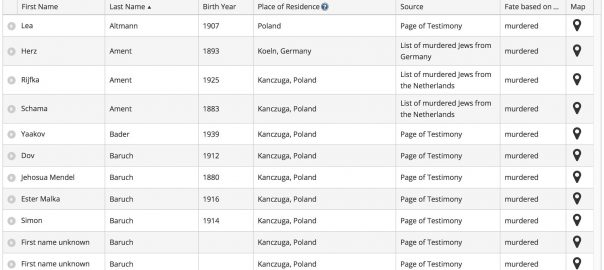
The links for each town generate a search of the database for people with a connection to the town. Whenever researching Jewish families, particularly those from Poland, searching the Yad Vashem database is critical not only for finding information on one’s family members who died in the Holocaust, but also for seeing who submitted Pages of Testimony for one’s relatives, and seeing who else they submitted Pages for, as that frequently allows one to make connections to other family members.
Finding all the Pages submitted by the same person recently became much easier, as Yad Vashem added a link on the details page for each Page of Testimony that automatically generates a list of the Pages submitted by the same person. In the past you have to do an Advanced Search using the name of the submitter, but now it’s as simple as clicking a link.
Keep in mind, however, that sometimes people in the database, including the submitters, have more than one name for various reasons. See my article Tracking down a couple that disappeared during the Holocaust for an example of an incorrect submitter name due to a typo or transcription error, as well as two whole sets of Pages of Testimony submitted by the same person a few months apart under different names (one time using his legal surname which was his mother’s maiden name, and one time using his father’s surname).
I hope everyone finds these links useful. Let me know if you find information on your family that you didn’t know.
[Update: The lists for 2017-2018 and 2019 are now available.]
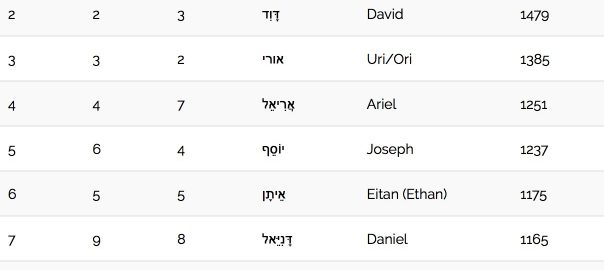
I’m happy to release my list of the 101 most popular Jewish boys names in Israel for 2016, based on recently released data for that year. This follows up my earlier releases of lists for 2014 and 2015. You can also see the lists for the 101 Most Popular Jewish Girls Names in Israel in 2016.
Five boys names broke into the list in 2016 – Ari (all the way from 106 to 56), Malachi (107 to 77), Roy/Roi (108 to 88), Gabriel (111 to 92) and Osher (104 to 99). The five that left the list were Yotam (99 to 103), Tomer (91 to 105), Dan (101 to 106), Yarin (90 to 108), and Ofek (80 to 109).
All the columns in the table below can be used to sort the table, so you can sort the table to see the order of ranking for each year, or by the spelling of the name in Hebrew or English. You can also search the table using the search field on the top right of the table.
[Update: The lists for 2017-2018 and 2019 are now available.]
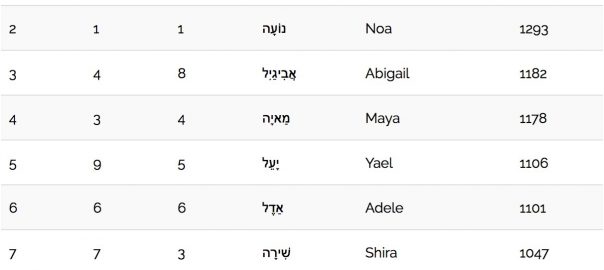
I’m happy to release my list of the 101 most popular Jewish girls names in Israel for 2016, based on recently released data for that year. This follows up my earlier releases of lists for 2014 and 2015. You can also see the lists for the 101 Most Popular Boys Names in Israel in 2016.
Three girls names broke into the top 101 in 2016 – Arbel (which jumped all the way from 104 to 73), Shoshana (105 to 93), and Chava (107 to 101). The three names that left the list were Lior (90 to 104), Shilat (101 to 105) and Yaara (92 to 106).
All the columns in the table below can be used to sort the table, so you can sort the table to see the order of ranking for each year, or by the spelling of the name in Hebrew or English. You can also search the table using the search field on the top right of the table.
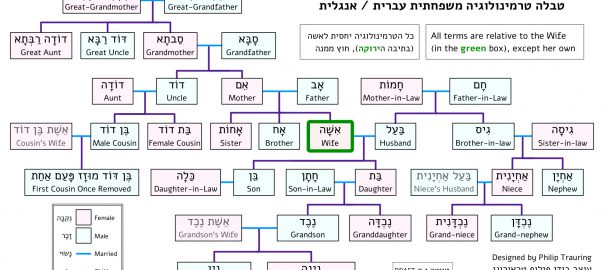
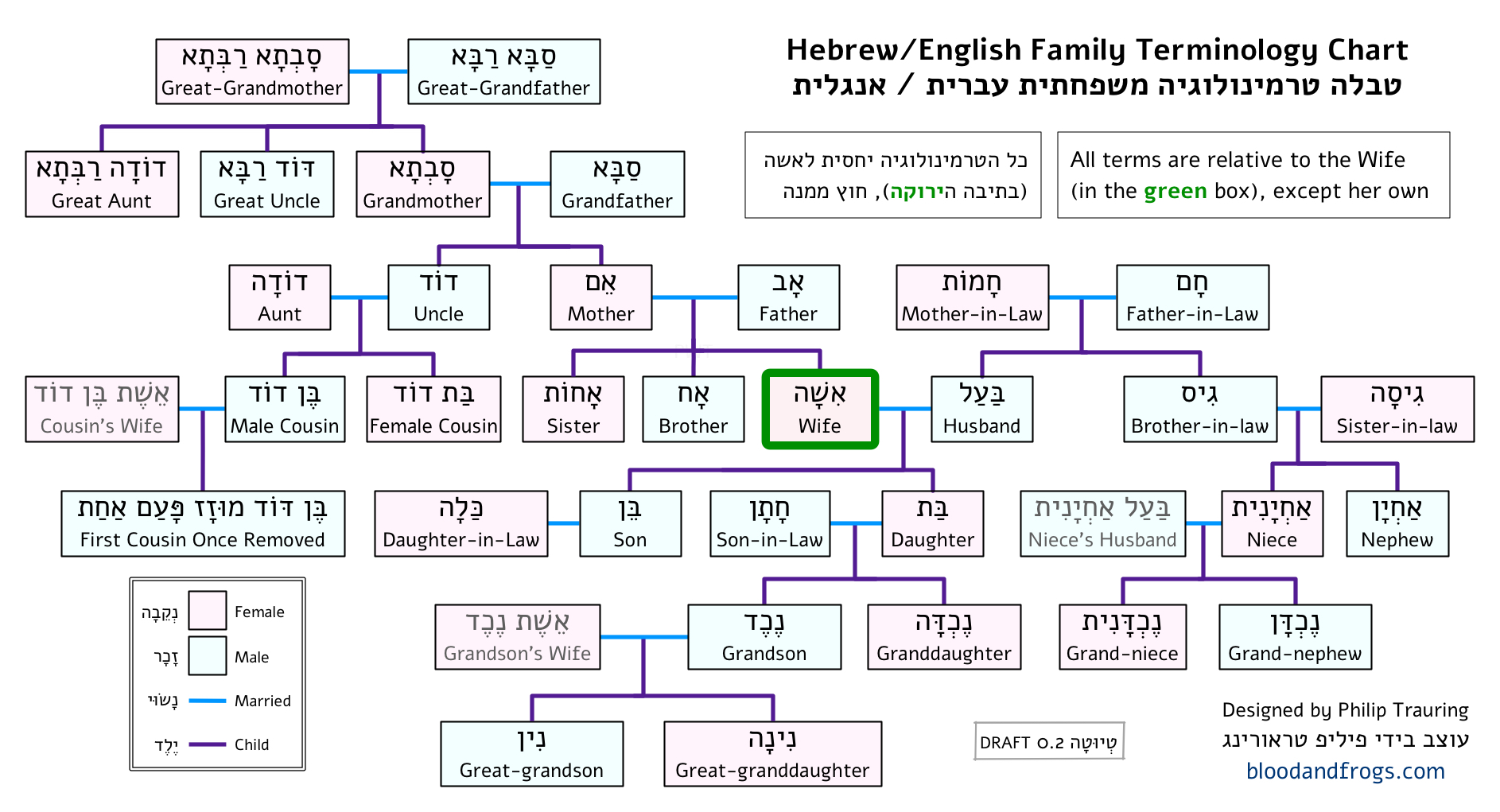
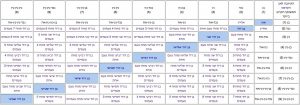
Happy Yom Haazmaut (Israeli Independence Day) from Jerusalem. In honor of the holiday I’m publishing a list (and accompanying chart) of Hebrew and English family and genealogy terms. For the impatient, the list of terms is at the bottom of this post. Keep in mind one thing when looking at the list – it’s a first draft and I expect it to change based on input from others and the comments made below. The list is not a dictate, it’s a discussion.
The following is the background on why I’ve put this together, what the issues were, and where I found the information.
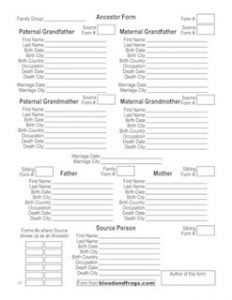
Recently I’ve been thinking about creating Hebrew versions of my B&F Forms System. As I’ve mentioned before, my collection of genealogy forms are designed to work together, connecting in ways that are fairly unique. I don’t know how many people have used my forms, as there’s no way to track their usage when they’re shared. I do know, however, that my forms have been downloaded over 40,000 times from this web site, and have been used by schools and other organizations, so I can only assume the number of people who have used them is higher.
B&F Ancestor Form
I’ve long wanted to translate the forms into Hebrew, but for many reasons, many of them technical such as no longer having the software I used to create the original forms, I’ve never been able to do it. Recently I’ve been looking into the idea of finally translating the forms, so I’ve been doing research to insure all the terms I use are correct. In my research I found no extensive glossary of family and genealogy terms in Hebrew, although there were many partial lists. That led me to start putting together my own, which I am presenting below. I’d like people to think of this as a beta version, however, as I’m not 100% certain on all the terms, as I’ll explain in detail. I also know that there are more terms to add in the future. This is the beginning of what I imagine will be a long discussion.
When I speak to people who learned English as a second language, invariably they describe it as a difficult language to learn. Primarily the problem people have with English is that there are so many exceptions to the rules, that it almost seems like there are no rules. Hebrew has a different problem, although it certainly has its own problem with exceptions. Hebrew, of course, has been in use for thousands of years. As a spoken language, however, it has a large gap in its history. Even two thousand years ago, many Jews spoke Aramaic or Greek in daily life, and reserved Hebrew for religious rites and scholarship. That’s not so different from the nearly thousand years that Yiddish was the primary spoken language of Ashkenazi Jews in Europe, or Ladino was used by Sephardic Jews after the expulsion from Spain in 1492. However you look at it, until the foundation of the state of Israel, it had been well over two thousand years since Hebrew had been widely spoken by people as their native language.
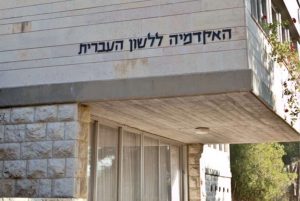
Academy of the Hebrew Language
One of the most amazing achievements of the Zionist movement in the late 19th and early 20th centuries, which some would describe as miraculous, was the revival of Hebrew as a spoken language. This is the only time in history that a language with no native speakers at the time was turned into a national language with millions of speakers. That process was started by individuals, most famously Eliezer Ben Yehuda, and continued by committee, and eventually by the Academy of the Hebrew Language, which was established in 1953 and tasked by the Israeli government to direct the development of the language.
With all of that, modern Hebrew remains a language in flux. Modern Hebrew starts with biblical Hebrew, but shows influences going back to Aramaic and Greek, on to Yiddish and Ladino, and more recent influences such as English and Arabic. While there is an Academy, that doesn’t mean people speak strictly by its rules. Certainly that is not the case. One good example is the use of the words Saba (סַבָּא) and Savta (סָבְתָא) for grandfather and grandmother. These words are universally used, but strictly speaking, not the proper Hebrew terms (they are in fact Aramaic, not Hebrew). The correct terms are actually Sav (סָב) and Sava (סָבָה), but I’ve never heard anyone use those terms. Additionally the correct term for grandmother (Sava) sounds a lot like the actually used term for grandfather (Saba). Remember that in Hebrew B and V are the same letter (the letter bet ב, B with a dot in the middle and V without). Another example is that the offical term for great-grandfather is Av Shileish (אָב שִׁלֵּשׁ), while the universally used term is Saba Raba (סַבָּא רַבָּא). Moreover, while the correct female version of this would be Savta Rabta (סָבְתָא רַבְּתָא), it seems many people say Savta Raba (סָבְתָא רַבָּא).
Another problem with figuring out the correct terms to use is the fact that Hebrew is a gendered language. There are no generic terms such as ‘cousin’ or ‘grandparent’. At best, one would use the male version of the word when lacking gender specificity, but that can lead to some confusion. In another example of official words versus actual usage, the official word for cousin is Dodan (דּוֹדָן) in the masculine, and Dodanit (דּוֹדָנִית) in the feminine. Many people, however, people use the terms Ben Dode (בֶּן דּוֹד) and Bat Dode (בַּת דּוֹד) instead. Literally those terms mean Son of Uncle and Daughter of Uncle. You could also say בֶּן דוֹדָה (Son of Aunt) or בַּת דוֹדָה (Daughter of Aunt), and some people do this, but some people also fall back on just using דּוֹד generically. In any of those four cases, however, the term literally refers to one’s first cousin (the child of your aunt or uncle). As such there essentially is no term for first cousin in Hebrew. You could say בֶּן דּוֹד רִאשׁוֹן if you wanted to be specific, but it’s not very common. In my experience Israelis describe the relationships they are trying to convey, and don’t necessarily use the ‘correct’ terms.
One example which took me some time to figure out was what to call a great-uncle or great-aunt. When I asked my neighbor, she said she would describe them as the brother or sister of her grandparent. When I told her I had come across the terms Dod Raba (דּוֹד רַבָּא) and Doda Rabta (דּוֹדָה רַבְּתָא) she had clearly never heard of them. If someone were to use these terms in speaking, I suspect that the female would end up being Doda Raba, similar to how Savta Ravta is normally used as Savta Raba. Interestingly the Academy shows these terms (not דּוֹדָה רַבָּא which is said, but not grammatically correct), but also Dod Gadol (דּוֹד גָּדוֹל) and Doda Gadola (דּוֹדָה גְּדוֹלָה), which may come from the English terms great-uncle and great-aunt (although Raba also means great).
Another interesting example is that Hebrew, unlike English, has specific words for great-grandson and great-granddaughter. While the terms for grandson and granddaughter are Neched (נֶכֶד) and Nechda (נֶכְדָּה) respectively, the terms for great-grandson and great-granddaughter are Nin (נִין) and Nina (נִינָה). How would you say great-great-grandson? Officially the term is Khimaish (חִמֵּשׁ), which comes from the Hebrew word for five, but in practice I think the real usage is Ben Nin (בֶּן נִין), which means ‘son of great-grandson’. Also, like the word for cousin, which means ‘son of uncle’, if you wanted to say great-great-granddaughter, you would say Bat Nin (בַּת נִין) which means ‘daughter of great-grandson’ even if the girl in question was the daughter of one’s great-granddaughter (although you could say בַּת נִינָה if you wanted to).
Choosing the terms to use, therefore, is a bit complicated. One thinks of the lexicographical debates in the past over descriptive versus prescriptive definitions. I tend towards the descriptive approach, as if something isn’t being used in real life, it’s not that useful. When there are terms that are not widely used as all, I tried to stick to the official terms, unless they seemed out of the pattern of other similar terms. I welcome discussion of these terms in the comments below. I imagine some people will disagree with the choices I have made.
To research these terms I looked at various dictionaries (including Morfix and Milog), but also online forums where these terms were discussed, articles that discussed the terms, as well as talking with native Hebrew speakers to understand what terms they used in the real world. Some of the sources include the Academy of the Hebrew Language’s Term Database and articles there as well (עברית לכל המשפחה, איך ייקראו בן הנין ואחי הסב?, חם וחמות, חותן וחותנת, פרשת וירא – נִין), several articles across different sites (1, 2, 3, 4), and the Tapuz Forum (some example threads include: 1, 2, 3, 4, 5, 6, 7, 8). That last Tapuz link was amusingly a discussion of families in Harry Potter.
Wikigenia Cousin Chart
After piecing together most of my list, I found a cousin chart which confirms most of what I had determined for cousins, laying it out very nicely. One problem with the system used in the chart (going from בֶּן נִין to נֶכֶד נִין to נִין נִין to בֶּן נִין נִין) is that it becomes hard to calculate the further you go. I agree that’s the general consensus on what people would do, but I wish there was a simpler way to do it. It seems there is no set method of laying out these relationships. Another problem is the term for ‘removed’ which I’ll discuss below.
Reverso Context
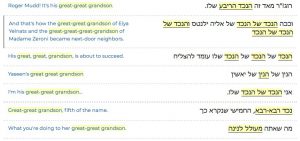
One site that was useful in finding real world usage of these terms is Reverso Context, which for the term great-great-grandson, includes the following real-world examples: נֶכֶד הריבע, נֶכֶד שֶׁל נֶכֶד, and נֶכֶד רַבָּא רַבָּא. In English, those would be grandson of grandson, grandson the fourth, and great-great-grandson. Interestingly, none of the examples include בֶּן נִין from the chart mentioned above. Keep in mind when looking at Reverso Context that not all the translations are accurate. They are for the most part taken from an interesting source – a public database of movie sub-titles. Those sub-title files are likely not professionally translated but done by film enthusisats looking to share translations of movies into their own language. Transcriptions are done by everyday people and not professionals, however, that can actually be beneficial when trying to analyze regular usage in a non-academic setting.
Another example from Reverso Context is for the term great-great-grandfather, which is kind of the reverse of the above. Here we have the expected סָבָּא רַבָּא רַבָּא, but also סָבָּא שֶׁל הַסָבָּא ,סָבָּא רַבָּא נֶהְדָר, and סָבָּא ריבעה.
One more example where this gives some insight is how to explain cousins of different generations. In English we say first cousin twice removed, or third cousin once removed, etc. In the chart mentioned earlier, they use the term ‘מוּזָח’ which means moved, so בֶּן דּוֹד שְׁלִישִׁי מוּזָח פָּעַם אַחַת is third cousin moved one time. In Reverso Context, a common usage is הוּסַר, which means to remove. This could simply be because there is no established terminology here, and these examples are people who are simply translating the English term. Other terms used include מֶדּוֹר which means from generation (i.e. בֶּן דּוֹד מֶדּוֹר שְׁלִישִׁי for first cousin from the third generation) and מַדְרֵגָה which means level (ie. בֶּן הַדּוֹד הַרִאשׁוֹן מַדְרֵגָה שְׁנִיָּיה for first cousin level two). This is confusing since some people say בֶּן דּוֹד מַדְרֵגָה שְׁנִיָּיה to mean second cousin. For that reason I would avoid using מַדְרֵגָה in this case. At this point it seems that whoever is using a word for this concept is making it up as they go. When discussing this issue with a friend, they suggested a better word might be מוזז, which can mean removed or shifted, and now I have about five candidates. There is no ‘correct’ term, at least in the sense of being approved by the Academy of the Hebrew Language. One way to get such terms approved is probably to get them put to use in the real world. For the time being I’m going with מוזז, and I welcome discussion in the comments below on what you think of this term, and what you use to describe cousins of different generations. If you have real-world examples, particularly published in books or news media, that would be helpful.
Lastly, the goal for this list, and the accompanying chart at the top of the page, is to help family researchers who speak English to figure out what terms to use in Hebrew, and also for Hebrew speakers to figure out what terms to use in English. I’m hoping this will help everyone communicate better, and with a bit more precision, when conversing with family or archives in English speaking countries and in Israel. For those terms that are not well known, perhaps this list will help them receive some use, and for those those concepts that did not have established terms, hopefully this list will help spur on the approval of such terms.
Below is the full list of terms. This is a first draft, so if you see an error, please post it in the comments below. I will correct the list and update it (and the chart at the top) over time. I’ve strived to find the middle ground between what is really used in Hebrew, and what is ‘correct’ according to the academy. Usually the academy recognizes other uses and lists them, even if they’re not preferred, so I’m only switching their order of preference.
For the transliterations, note that I use kh to represent the letter khet (ח), which represents a sound that is not used in English. While you can very roughly approximate the pronunciation of words that begin with kh by dropping the k (i.e. haam instead of khaam), that doesn’t work when the letter is at the end of the word (i.e. ah instead of akh).
In the table below columns are sortable, and you can search a term as well in the search box at the top. If you think there are terms that should be added (and I’m sure there are) please post your idea to the comments below.
Hebrew
Transliteration
English
גֶּנֶאָלוֹגְיָה
genelogya
genealogy
מִשְׁפָּחָה
mishpakha
family
בֵּן מִשְׁפָּחָה
ben mishpakha
family member
אִילַן יֻחֲסִין
ilan yukhasin
family tree
אָב קַדְמוֹן
av kadmon
ancestor
צֶאֱצָא
tse'etsa
descendant
אֵם
aim
mother
אָב
av
father
אִמָּא
eema
mom
אַבָּא
abba
dad
הוֹרֶה
horeh
parent
אִשָׁה
isha
wife
בַּעַל
baal
husband
בֶּן זוּג
ben zoog
partner (male)
בַּת זוּג
baht zoog
partner (female)
בַּת
baht
daughter
בֵּן
ben
son
אָח
akh
brother
אָחוֹת
akhot
sister
אַחַאי
akhai
sibling
סַבָּא
saba
grandfather
סָבְתָא
savta
grandmother
סַבָּא רַבָּא
saba raba
great-grandmother
סָבְתָא רַבְּתָא
savta raba
great-grandmother
סַבָּא רַבָּא רַבָּא
saba raba raba
great-great-grandfather
סָבְתָא רַבְּתָא רַבְּתָא
savta rabta rabta
great-great-grandmother
דּוֹד רַבָּא
dode raba
great-uncle
דוֹדָה רַבְּתָא
doda rabta
great-aunt
נֶכֶד
nekhed
grandson
נֶכְדָּה
nekhda
granddaughter
נִין
nin
great-grandson
נִינָה
nina
great-granddaughter
בֶּן נִין
ben nin
great-great-grandson
בַּת נִין
bat nin
great-great-granddaughter
דוֹד
dode
uncle
דוֹדָה
doda
aunt
אַחְיָן
akhyan
nephew
אַחְיָנִית
akhyanit
niece
בֶּן דוֹד
ben dode
male cousin, cousin
בַּת דוֹדָה
baat doda
female cousin
בֶּן דּוֹד שֵׁנִי
ben dode sheni
second cousin
בַּת דּוֹדָה שְׁנִיָּה
bat doda shnia
second cousin (female)
בֶּן דּוֹד שְׁלִישִׁי
ben dode shlishi
third cousin
בַּת דּוֹדָה שְׁלִישִׁית
bat doda shlishit
third cousin (female)
בֶּן דּוֹד מוּזָז פָּעַם אַחַת
ben dode muzaz pa'am akhat
first cousin once removed
בֶּן דּוֹד שְׁלִישִׁי מוּזָז פַּעֲמַיִם
ben dode shlishi muzaz pa'amayim
third cousin twice removed
בֶּן דּוֹד רְבִיעִי מוּזָז שָׁלוֹשׁ פְּעָמִים
ben dode rivee'ee muzaz shalosh pa'amim
fourth cousin three times removed
בֶּן דּוֹד רָחוֹק
ben dode rakhoke
distant cousin
חָם
khaam
father-in-law (can refer to the father either spouse, but when using חוֹתֵן for the father of the wife, חָם is used as father of the husband)
חָמוֹת
khaamot
mother-in-law (can refer to the mother either spouse, but when using חוֹתֶנֶת for the mother of the wife, חָמוֹת is used as mother of the husband)
חוֹתֵן
khotain
father-in-law (only used as the father of the wife)
חוֹתֶנֶת
khotenet
mother-in-law (only used as the mother of the wife)
The short version of what I’m about to write is that this web site is running on a new web server, which should mean the site will be running faster than ever before. If you see any problems on the site, please contact me so I can fix them. For those interested, I am including more details below.
I am grateful for all the users of this site, and hope everyone who has visited has benefited in some way when they’ve come to the site. This web site has been around since 2010, when it was originally launched as a Blogger site. Back in 2013 I moved the site to self-hosted WordPress, which allowed me to expand the site’s content and functionality, but also meant I had to maintain the site and had to deal with the fact that many other sites were running on the same server. My web host was actually great, and I continue to run other sites on the same host without any problems, but they had no good solution for moving this site to a bigger server when it needed it.
When I created the B&F Compendium of Jewish Genealogy, I stretched the capacity of the server to its limits. The average WordPress site only has a few Pages (as opposed to Posts, of which there can be many), maybe a few dozen, but the Compendium uses over 25,000 Pages and is continuing to grow. Whether WordPress was the right platform to develop the Compendium on is a different question, but as I had it running in WordPress I had to find a way to increase the capacity of the server without breaking the bank (since this site is a labor of love, and I make no money from it).
For those who use WordPress, think about the fact that on the WordPress editor page, all Pages are loaded into a drop-down menu for selecting a parent page. Imagine now that you have 25,000 pages and that the menu is obviously part of the page that loads.
Over the past several months I’ve been working to move my site to a service operated by Amazon called Lightsail. Lightsail is essentially a simplified version of Amazon’s EC2 cloud computing service. You pay a set amount a month and get a VPS server that you control. For $5 a month you get a Linux server with 512MB of RAM and 20GB of storage, and the best part is that you can easily upgrade the server if you need more power. The $5/month is more than I paid before, but it’s still quite reasonable for the added power I get, and if I need to I can move to a more powerful server for simple increments in cost.
Migrating a web site to a new server is never easy, and not to be taken lightly. There are always unexpected problems, and my site had some fairly unique problems. One of the problems I ran into was that the database that holds all the information for the site was so large that it was difficult to even export to a format I could move to the new server. At first the exported database was over 300MB. I looked into the database and saw a lot of the records had to do with plug-ins I used. I had to disable those plug-ins, and remove their data from the database manually, which brought the size down to a still difficult 100MB. When I was finally able to export the database, I found it impossible to import to the new server. The web interface to the database, which was the easiest way to import the data, would run out of memory before completing the import. I tried uploading the file to the server directly and importing the data via the command line, but still had trouble.
Eventually I found a great little piece of code that helped me import the data by breaking it down into smaller chunks and importing it piece by piece (BigDump, which I recommend highly for those who need to import large databases). However, even with this new tool I ended up with an error message I didn’t understand. After asking for help online, I found out that the error was due to the original web site running on an older version of the database software (MySQL) and that the newer version didn’t allow a date field to be empty (set to 0 essentially). When you had a data field in the database that you didn’t have a value for, it was supposed to be set to Jan 1 1970 instead. Go figure, but I had 53 times in the database where I had a zeroed out date, and doing a find and replace in the database fixed the problem and the database finally imported.
Other problems were more mundane. As I tried different parts of the site, I noticed certain things didn’t work properly.
The contact form didn’t work, which it turns out was because the new server didn’t handle mail the same way as the old server. After re-configuring the mail, the contact form began to work.
The maps on the Compendium city pages were not being displayed because for some reason Google thought this was a different site. After setting up new credentials for the the Google Maps API, the maps began to work again as well.
The more insidious problems had to do with file and folder permissions. Having moved much of the files over from my old server, the file permissions on many things were wrong. Now I find file permissions in UNIX to be a form of the dark arts, but slowly I’ve been fixing the problems. I noticed, for example, that I couldn’t upload new images, which is because the server couldn’t create a new folder to upload images to for this month. Sure enough, it was a permissions problem. Upgrading plug-ins has also been difficult due to permission issues. This is probably an issue that will continue to cause issues for some time until I’ve worked out all the bugs.
For the last few days the site has been running completely on the new server. I imagine there will still be problems going forward, and I ask that if you run into anything you think is weird on the site, please please contact me and tell me what you saw. As with the above examples, the problems can be hard to predict, so if you see something odd, such as an error message, or even a missing image, don’t assume I already know about the problem. Please contact me and let me know, so I can fix it for everyone.
This website uses cookies to improve your experience. We'll assume you're ok with this, but you can opt-out if you wish.AcceptRead More
Privacy & Cookies Policy
Privacy Overview
This website uses cookies to improve your experience while you navigate through the website. Out of these, the cookies that are categorized as necessary are stored on your browser as they are essential for the working of basic functionalities of the website. We also use third-party cookies that help us analyze and understand how you use this website. These cookies will be stored in your browser only with your consent. You also have the option to opt-out of these cookies. But opting out of some of these cookies may affect your browsing experience.
Necessary cookies are absolutely essential for the website to function properly. This category only includes cookies that ensures basic functionalities and security features of the website. These cookies do not store any personal information.
Any cookies that may not be particularly necessary for the website to function and is used specifically to collect user personal data via analytics, ads, other embedded contents are termed as non-necessary cookies. It is mandatory to procure user consent prior to running these cookies on your website.

 When I created the
  Over the past several months I’ve been working to move my site to a service operated by Amazon called Lightsail. Lightsail is essentially a simplified version of Amazon’s EC2 cloud computing service. You pay a set amount a month and get a VPS server that you control. For $5 a month you get a Linux server with 512MB of RAM and 20GB of storage, and the best part is that you can easily upgrade the server if you need more power. The $5/month is more than I paid before, but it’s still quite reasonable for the added power I get, and if I need to I can move to a more powerful server for simple increments in cost.